
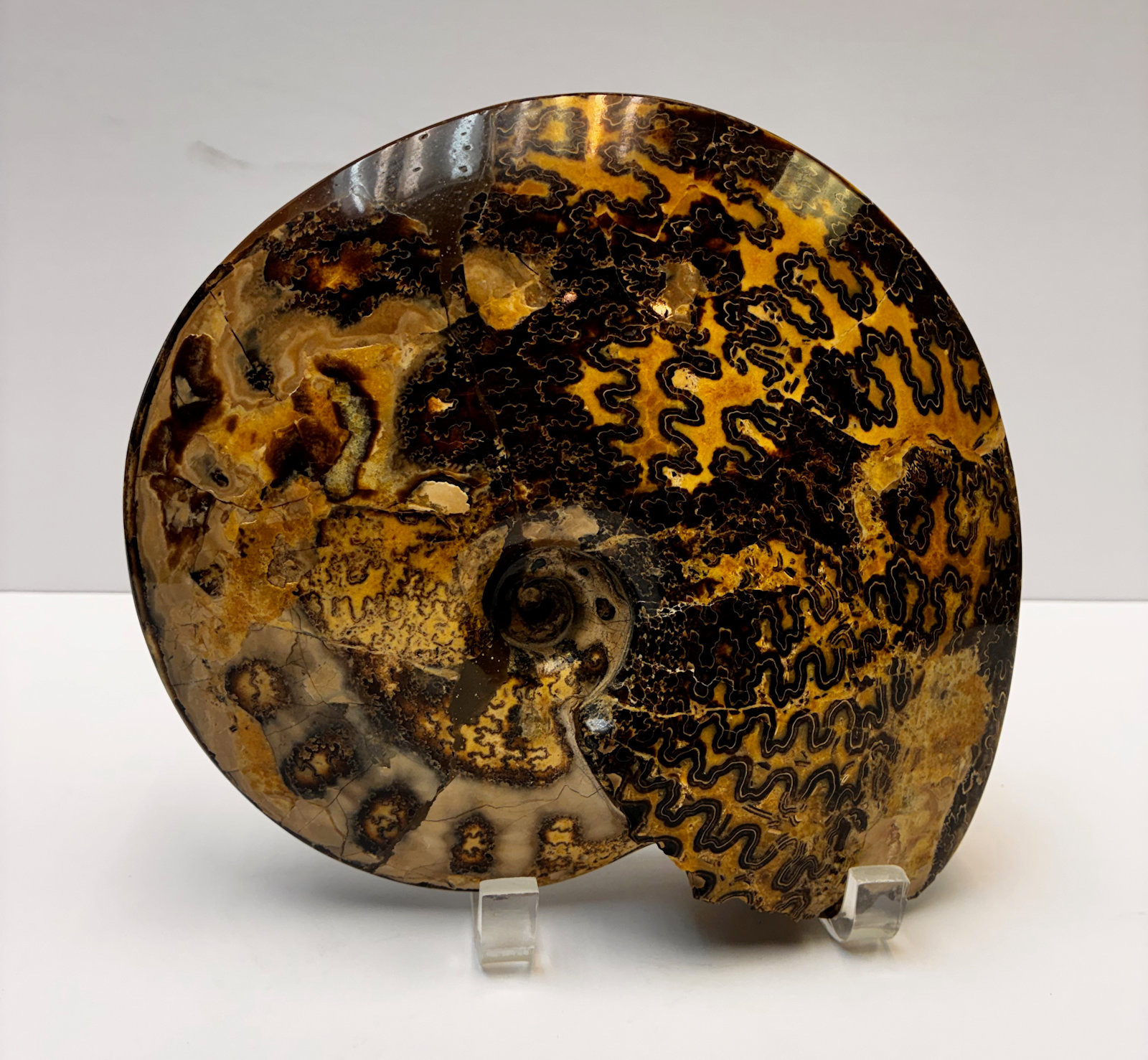
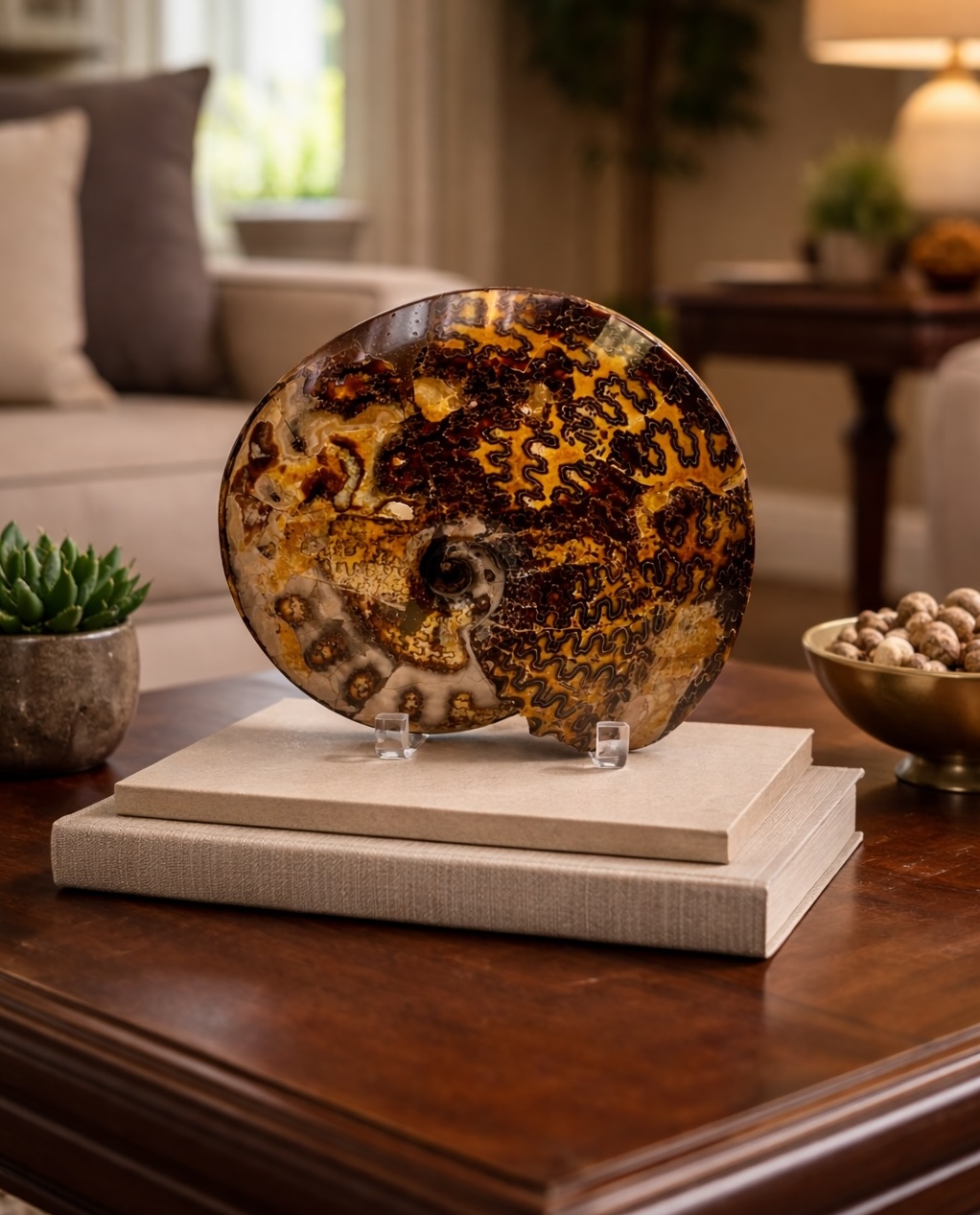
Some pieces are decorative. Others are historic. A fossilized nautilus is both.
At Hunter Gallery in Mountain Lakes, visitors can see an extraordinary fossilized nautilus estimated to be 40 million years old — a striking natural object that combines beauty, rarity, and the quiet power of deep time. It is the kind of piece that immediately captures attention, whether you are drawn to natural history, unusual collectibles, or objects that make a statement in a room.
The nautilus is known for its elegant spiral shell, one of the most recognizable forms in nature. Its chambered structure once helped the animal control buoyancy as it moved through ancient seas, and that same structure gives the fossil its sculptural beauty today. The broader nautilus lineage stretches back roughly 500 million years, which is one reason these fossils continue to fascinate collectors, scientists, and designers alike.
What makes a fossilized nautilus so compelling is that it is more than a shell. It is evidence of survival, preservation, and time. Fossilization happens only under the right conditions, typically when remains are rapidly buried and protected long enough for minerals to gradually replace organic material. The result is not just an old object, but a remarkable transformation in which nature preserves a once-living form in stone.
For many people, the appeal is immediate. The fossilized nautilus has a strong visual presence, with its graceful spiral, layered chambers, and natural symmetry. It feels equally at home in a refined interior, a collector’s cabinet, a library, or an office where it can be appreciated as both art and conversation piece. It has the elegance of sculpture, but with a story no artist could invent.
That story is part of the attraction. Long before human history, long before cities, roads, or modern coastlines, creatures like the nautilus moved through marine environments that no longer exist. To stand in front of a fossil like this is to feel that scale of time in a very real way. It reminds us that beauty in nature is not fleeting. Sometimes it survives for millions of years.
The nautilus also carries cultural and symbolic appeal. Its shell has long been admired for its balance, intricacy, and natural design, and it has inspired collectors and artists for generations. In a fossilized form, it becomes even more meaningful — a rare object that is visually striking, historically significant, and deeply memorable.
At Hunter Gallery, this fossilized nautilus is not simply here to be admired in passing. It is here to be experienced up close — and for the right collector, it is an opportunity to own something truly exceptional. Few pieces offer this combination of natural artistry, age, and presence.
If you appreciate unusual finds, museum-worthy objects, and pieces with a story behind them, visit Hunter Gallery in Mountain Lakes to see this remarkable fossilized nautilus in person. It is a rare chance to encounter — and possibly acquire — a genuine piece of paleontological history. While at the gallery browse our other fine art, sculpture, glass works and ceramics from the 18th through the 21st centuries.